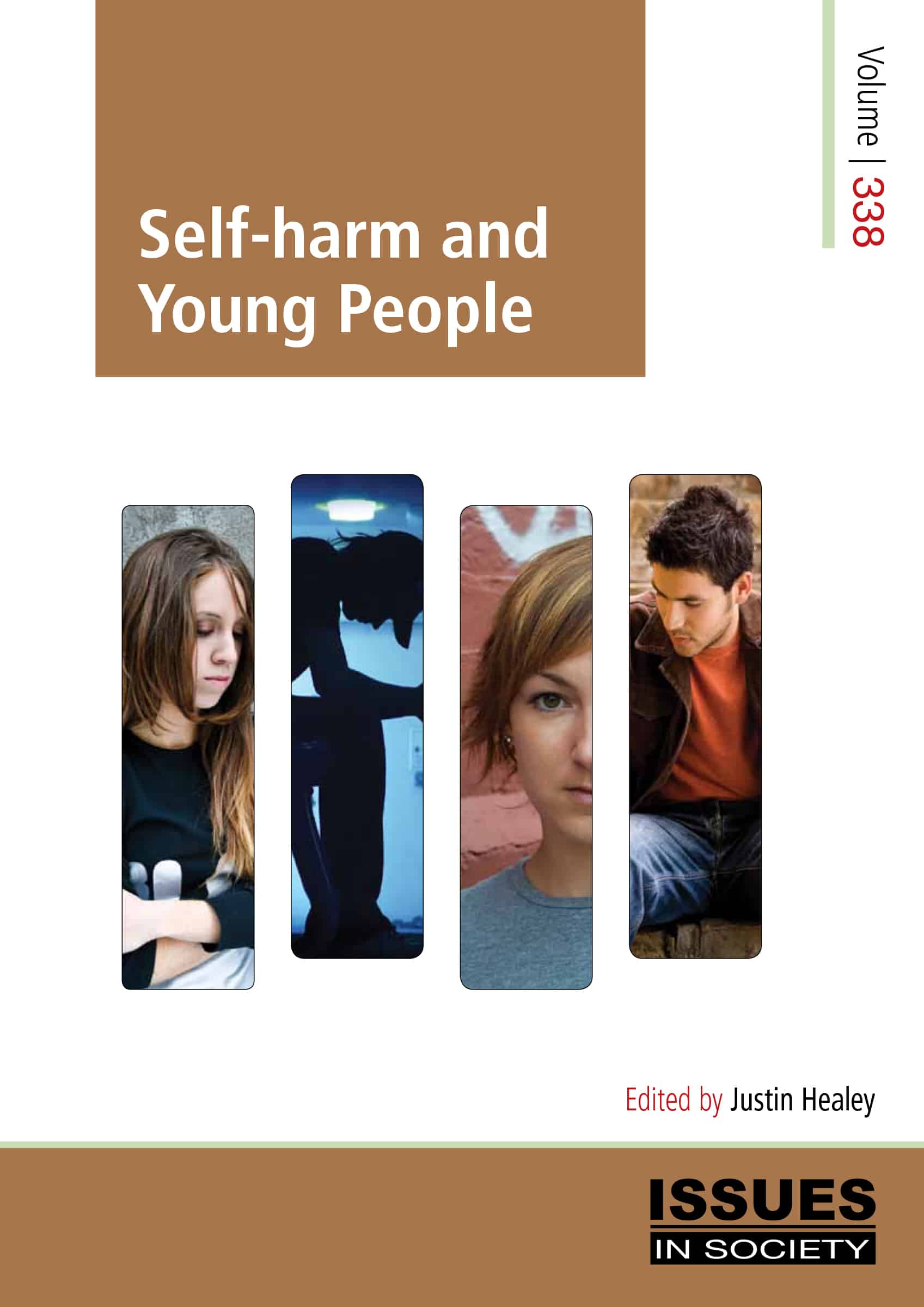
Self-harm and Young People

Cover - Self-harm and Young People
  • Self-harm and Young People
  • Volume 338
  • Editor: Justin Healey
  • Print book ISBN: 978 1 921507 70 0
  • E-book ISBN: 978 1 921507 71 7
  • Year: 2012
  • E-book: $24.00

There are many types of behaviours that are considered to be deliberate self-harm (or self-injury), and young people harm themselves for different reasons. Non-fatal, self-injuring behaviours such as self-cutting, self-poisoning, self-burning and even attempted suicide are common but often hidden responses to emotional pain, and are attempts to relieve, control or express distressing feelings. Research suggests that 6-7% of young Australians aged 15-24 harm themselves in any given year, and over 12% report having self-harmed at some point in their life. This title explores the prevalence of self-harm, identifies the warning signs, and addresses the myths and misconceptions. Advice is also presented on how to deal with these behaviours for people who self-harm and their concerned friends and families. What are the causes of self-harm, who is at risk, and what are the ways in which young people in distress can find support in order to cope with their feelings? How do you keep out of self-harm’s way?

Worksheets and activities; Glossary; Fast facts; Web links; Index
Fast facts:

  • Self-harming is a behaviour and not a mental illness.
  • The number of young people who commit suicide is relatively low compared with the number who commit self-harm.
  • In 2005-06, there were 7,299 hospitalisations of young people due to intentional self-harm – a rate of 197 per 100,000 young people.
  • For females, self-injury peaked between 15-24 years of age. For males, it peaked between 10-19 years of age. The average age of onset was 17 years, but the oldest was 44 for males and 60 for females.
  • The intentional self-harm hospitalisation rate was almost twice as high among Aboriginal and Torres Strait Islander young people compared with other young Australians in 2005-06.
  • An estimated 200,000 Australians, or 11 per 1,000 people per month, self-injure.
  • One in twelve teens self-harm during their adolescent years, with 15 years of age identified as the most likely age for self-harm, a study from the Murdoch Childrens Research Institute and Kings College in London has found.
  • About 230,000 Australians deliberately self-harm in a 4-week period and about 24,000 cases each year result in hospitalisation.
  • 8% of 15-24 year olds have self-harmed at some point in their life.
  • Up to 40% of self-harmers have thought about, or attempted, suicide.
  • 6-7% of young Australians (aged 15-24) have self-harmed in any 12-month period.
  • The average age at which self-harm first occurs is 12-14 years.
  • For some young people self-harm is a ‘once off’ event, but for over 50% it can become repetitive.
  • Self-harm is not a new behaviour that arrived with a certain subculture or ‘trend’ amongst young people.
  • Borderline Personality Disorder is the only mental health disorder for which self-harm is a diagnostic feature.
  • A person who is suicidal is desperate to never feel anything again, whereas the person who self-harms is only trying to make themselves feel better.
  • Compulsive self-harm is thought to be linked to obsessive-compulsive disorder.
  • The predominant forms of self-harm are cutting the skin of arms or legs and/or deliberate overdoses of both pres-cription and over-the-counter medications not designed to be fatal.
  • The rate of young people reporting self-injuring behaviours is increasing – in 2008, self-injury was reported 7,710 times; in 2009, this had risen to 8,166 reports, with 15% of all counselling type contacts reporting these behaviours.
  • Dialectical Behaviour Therapy is an effective way of treating self-injuring behaviour. It teaches how to identify and challenge faulty and rigid thinking, and change the resulting unhealthy behaviours.
  • Self-harm often begins in the teenage years and is more common in young people aged between 11-25 years.
  • Self-harm is distinguished from risk-taking behaviour, which involves repeatedly putting oneself in dangerous situations.
  • More than 50% of self-harmers have been abused.
  • The extent of self-harming is hard to research because it is often done in secret and may be hidden under clothes.
  • Behaviours such as tattooing and body piercing are not generally considered to be self-harming behaviours in our culture.
  • In any year, more than 24,000 people are admitted to hospitals in Australia as a result of self-harm, and thousands more are treated in emergency departments and not admitted.
  • Usually, more women than men self-harm. Women more commonly take overdoses than men. Overdose is the most common form of self-harm in Australia.
  • People who self-harm often struggle with problem-solving, and they find it particularly hard to ask for help.
  • Of those who present to a hospital after self-harm, about half will never again attend with the problem.
  • 1% of those who self-harm die by suicide within the first year of going to hospital with the problem.
  • Even if there is no suicidal intent accompanying the delib-erate self-harm, the risk of accidental death is very real.
  • People who repeatedly injure themselves may come to feel that they cannot stop, and this may lead to feelings of hopelessness and possibly suicidal thoughts.
  • About 80% of young people who complete suicide told someone they intended to kill themselves.
  • Those who have a history of harming themselves deliberately are also at higher risk of suicide.
  • Whilst suicide tends to run in families, it is not hereditary.
  • Although suicide attempts are more common in women than men, generally men take their own lives at a rate four times that of women.
  • The rate of suicide deaths in males has fallen by 29% in the last decade and the rate for females has dropped by 46%.
  • For men, the largest drop in suicide rates between 2000 and 2009 is observed for 20-24 year olds and 25-29 year olds, with a fall of 42% in suicide rates for each of these groups.
  • For women the largest drop in suicide rates between 2000 and 2009 is observed for 15-19 year olds, with a fall of 46% in suicide rates for this group.
  • Since the late ’90s, more than 40% of suicide deaths have been from hanging – the most common method.
  • Females who take their own lives do so via drug poisoning in more than a quarter of cases.
  • Substance abuse (including alcohol consumption) can be both a risk factor and a precipitant of suicide.
  • Having a mental health problem does not mean a person will have thoughts of suicide.